
Political battles loom in fight for robust European whistleblowers Directive
The European Union’s whistleblower protection directive, is in a state of flux, key political battles are being fought right now. The whistleblower proposals as they currently stand, have several Achilles heels tucked into the directive’s fine print.
 If not taken forward in the right way, this legislation could shrink freedom of speech, rather than expand it, hence the high stakes of these ongoing political battles.
My hope is that the political compromises which will have to be made, do not weaken protection against retaliatory action and the right to disclose. Even if compromises are necessary for those who fear malicious whistleblowing accusations, suppressing false statement does not require suppressing freedom of speech.
The proposed legal requirement to report everything to the employer whose organisation abused its power is extremely problematic
The proposed legal requirement to report everything to the employer whose organisation abused its power is extremely problematic. Especially if you then have to wait months before you can contact authorities or law enforcement agencies about the misconduct. And then wait up to 9 months after the initial report, before going public. All this would make the directive counter-productive. Whistleblowers would largely be left defenceless, unless they guess right about proposed subjective exemptions. And the alleged wrongdoer would have enormous head start in terms of destroying information, intimidating witnesses and affecting a cover-up. This provision would fuel the obstruction of justice in a piece of supposedly anti-corruption legislation, which would be insane, while worsening the situation for whistleblowers, who are more likely to stay silent under these circumstances.
The current proposals require nations to have strict penalties for malicious or abusive reporting. This is problematic in that the legal definition of malicious or abusive reporting are so broad, including anything that is insulting. Well, whenever you blow the whistle, you are insulting the person who may have engaged in misconduct. It would mean almost every whistleblowing disclosure would be vulnerable to retaliatory litigation.
If there is a chilling effect from getting fired, there is a freezing effect from facing imprisonment or a multi-million-dollar legal judgment
Companies would then switch from firing whistleblowers to filing multi-million Euro lawsuits or even criminal cases against them. These cases could claim that those reporting wrong-doing have insulted and abused them. In such a scenario the whistleblowers are again less likely to come forward. If there is a chilling effect from getting fired, there is a freezing effect from facing imprisonment or a multi-million-dollar legal judgment.
And then there is the issue of the burdens of proof, which is about how much evidence is takes for either side to win. The current proposals have reasonable burdens of proof, but there has been a strong political counter attack to make the whistleblower to have to prove everything and the accused employer to have to prove very little. A situation where the employer has no obligations regarding the burden of proof would be disastrous, and unprecedented.
Every one of 12 European nations with whistleblower laws require employers to merit a reverse burden of proof after the whistleblower has proven organizational misconduct and faced subsequent retaliation
Here’s why every one of 12 European nations with whistleblower laws require employers to merit a reverse burden of proof after the whistleblower has proven organizational misconduct and faced subsequent retaliation. The vindicated whistleblower is unemployed and banished from the workplace, without access to evidence. By contrast, the discredited organisation that fired the whistleblower has access to the whole labour force who they can recruit with carrots or sticks testify against the whistleblower. They also have access to all the documents they need to fashion a case to justify their actions. If opponents of a reasonable directive succeed in gutting the burden of proof, then the legislation will become a trap which rubber stamps retaliation against whistleblowers. It would increase secrecy rather than shrinking it.
However, it is important to recognise how strong the current proposals are. When is process began observers were expecting a less. In the current proposals there are comprehensive three stage rights. If the directive clears all the legal and political hurdles it faces, then 27 nations will have strong and comprehensive safeguards and protections for whistleblowers. This in itself would be a breakthrough both for accountability and freedom of speech.
The Directive will become a metal shield which gives decent and strong protection to whistleblowers in 27 countries
As I see it, this reform could still go either way. We still can end up with a Directive that provides advance warnings to wrongdoers, so they can cover-up, and only offers the protection of a cardboard shield that will increase uglier retaliation. If the poison pills are removed, however, the Directive will become a metal shield which gives decent and strong protection to whistleblowers in 27 countries, which would be a landmark paradigm shift.
The Whistleblowing International Network (WIN) has developed a set of Legal Briefs for all those interesting in making the whistleblower directive work for the citizens of Europe. They are based on the 40 years of experience and expertise of Tom Devine, Legal Director of the Government Accountability Project (author of this blog) and Anna Myers, Executive Director of WIN. The WIN Legal Briefs are available HERE

About the author
Tom Devine is Government Accountability Project's Legal Director, and has worked at the organization since 1979. Since that time, Tom has assisted over 5,000 whistleblowers in defending themselves against retaliation and in making real differences on behalf of the public.
Tom has authored or co-authored numerous books, including 2011's The Corporate Whistleblowers Survival Guide: A Handbook for Committing the Truth, Courage Without Martyrdom: The Whistleblower's Survival Guide.
MORE ARTICLES

The European Council must ensure EU delivers on its promise to whistleblowers
The European Council has a responsibility to protect the positive amendments made to the proposal for a whistleblower protection directive adopted by the European Parliament’s legal affairs committee last month.
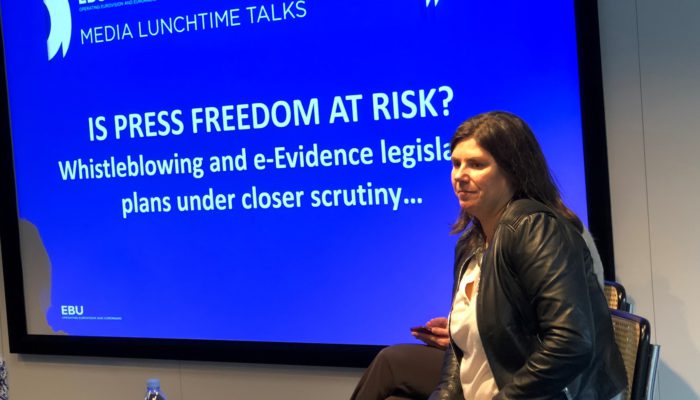
Rozière positions whistleblower protection law as response to public concerns
It would be a real shame if member states’ representatives were now seen as acting against public concerns, in resisting a whistleblower protection law which encourages the reporting of crime and wrongdoing.
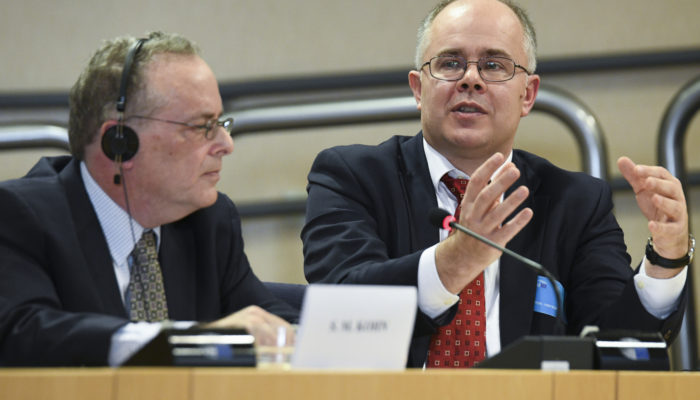
Danske Bank whistleblower testifies at European Parliament
The now famous Danske Bank Whistleblower, Howard Wilkinson, testified before the TAX3 European Parliament Committee last week. Wilkinson reported suspicious financial transactions at Danske Bank’s Estonia branch, where he worked until 2014.

European Parliament takes stand on stronger whistleblower directive
The WhistleblowerProtection.EU platform is celebrating a job well done, after the Legal Affairs Committee of the European Parliament passed a strengthened whistleblower protection directive, on the 20th of November.

Political battles loom in fight for robust European whistleblowers Directive
The EU’s whistleblower protection directive, is in a state of flux, key political battles are being fought right now. The whistleblower proposals as they currently stand, have several Achilles heels tucked into the directive’s fine print.

The role of media and investigative journalism
The LuxLeaks revelations were unprecedented not only in the level of corruption they uncovered, but also in the vast array of journalists from different media organisations working together to uncover corruption.
Why cross-border coherence matters
Many of the biggest whistleblower disclosures of recent years have been international in nature – LuxLeaks and the Panama Papers in particular. As pointed out by the Greens in the European Parliament, there is a general European public interest that often supersedes the national interests of a single member state.

State of play
Protection for whistleblowers in Europe is currently a patchwork affair. Some countries, such as Ireland having robust laws in place, while others, such as Cyprus, have practically none. 16 EU member states have specific laws or provisions, and 10 of those adopted their laws or in the past 5 years.
- « Previous
- 1
- 2
- 3
- 4