
State of play
Protection for whistleblowers in Europe is currently a patchwork affair. Some countries, such as Ireland having robust laws in place, while others, such as Cyprus, have practically none. 16 EU member states have specific laws or provisions, and 10 of those adopted their laws or in the past 5 years. Three other countries have at least partial legal protections for whistleblowers.
But the relative novelty of a law is no guarantee of rigour. In the case of Poland, for example, legislative provisions included in a Draft Law on Transparency in Public Life purporting to protect “whistleblowers” caused consternation among many civil society groups. The draft posed a threat to anyone coming forward to report a potential crime to the Polish Prosecutor as the “protection” afforded could be removed arbitrarily at any point by the Prosecutor without any independent legal recourse for the whistleblower. It was in effect a witness control provision rather than effective witness protection, let alone whistleblower protection. The risk to the rule of law in such circumstances is high.
Blueprint for Free Speech’s new report series on whistleblower protection in Europe shows that protections are still low across EU countries. Whistleblowers need stronger, more comprehensive laws – and those laws need to work in practice.
Gaps in the System rates whistleblower protection laws from all EU member countries against nine recognised European and international standards. The 28 EU countries’ total score in meeting the standards was 173 out of 759 points – just 23%.
Ireland, as mentioned above, receives the highest evaluation score (66.7%) in the report. Overall, more than half the EU-member countries now meet at least three of the nine international standards, in part or full. However, with seven countries scoring a zero and eight more rating below 25%, there is still a long way to go.
On 23 April 2018, the long-awaited Commission proposal was presented.
Transparency International called it a bold step in recognising the importance and rights of whistleblowers.
“The European Commission has produced an ambitious proposal, which will need to be strengthened to ensure that whistleblowers, no matter who they are or where they work, will be protected,” said Nicholas Aiossa, of Transparency International EU.
The proposed legislation will give much greater protection for individuals who wish to come forward when they encounter corruption or illegality in the workplace and will provide both public and private sector employers with greater legal certainty around their rights and obligations, said the organisation.
However, the proposal is not without its faults.
The planned “tiered reporting” process means that whistleblowers cannot go to public authorities until they have blown the whistle internally, and may only do so if the internal disclosure has not been followed up. There is a “get-out” clause which aims at covering cases like the Luxleaks case. Those who “could not reasonably be expected to use internal reporting channels in light of the subject-matter of the report” or those who “had reasonable grounds to believe that the use of internal reporting channels could jeopardise the effectiveness of investigative actions by competent authorities” may skip the internal reporting stage.
Another drawback under the proposal, whistleblowers can only file for interim relief if they can provide “reasonable grounds to believe that the detriment [they suffered] was in retaliation for having made the report.” This puts the burden of proof on the whistleblower.
Furthermore, there is no mention of workers’ rights. Trade unions are pushing for adding the right to protection when reporting abuses of workers rights and health and safety. Trade unions active to change the directive also express concern that there is no clear no-regression clause, an article in the directive which would prevent the directive to be used for lowering the protection anywhere. What is in place now is only a text allowing member states to keep or put in place better protection, no ban against using the directive to worsen protection.
Another shortcoming of the proposal which trade unions point to, is that the directive is not clear on that workers have the right to be assisted and represented by a trade union in the internal process. It is a key demand from trade unions to clearly state this right in the directive.
Another oversight is the lack of mention of anonymous reporting which is not mentioned anywhere in the Directive.
The Commission’s promise to produce a whistleblower protection proposal was widely seen as a sweetener to make the adoption of the Trade Secrets Directive more palatable. Trade Secrets Directive focussed on anti-competitive business practices including price-fixing cartels, keeping products off the market or unfairly excluding rivals.
Whistleblowers face huge risks in coming forward, and yet they are essential in holding the powerful to account in both public and private bodies. Speaking truth to power is a dangerous business, but the controversial Trade Secrets Directive made it even more perilous.
The Brussels-based Corporate Europe Observatory (CEO) described it as “resembling a blanket right to corporate secrecy” that “threatens anyone in society who sometimes needs access to companies’ internal information without their consent: consumers, employees, journalists, scientists.”
The Trade Secrets Directive was intended to harmonise EU-wide legislation protect companies against theft or publication of their intellectual property, customer lists, planned innovations or market strategies. Instead it has had a chilling effect on disclosing corruption. Many in the European Parliament were against it, in particular the Greens group.
The general principle is that whistleblowers must act in the public interest. What defines the public interest can be a murky business, and draconian laws like the Polish example above swing the balance of power too far against whistleblowers.
Whistleblowers should be able to report on wrongdoing. The Greens manifesto also says that “alerts should not be limited to purely illegal activities but should also cover other forms of misconduct or wrongdoing.” Furthermore, whistleblowers should not bear the burden of proof: those who disclosure inaccurate information in honest error should still be protected.
Issues such as public health, public finance, violations of human rights, corruption, fraud, discrimination, conflicts of interest and public safety, all deserve protection and should not be at the expense of a company’s desire to make money or a government’s wish to control the populace.
Right now most whistleblowers suffer a great deal as a result of their disclosures: on a micro level those reporting bad behaviour within their companies may face dismissal, demotion or denial of promotion. On a national scale, they may lose their freedom and their homes. Not everyone has the stamina and fortitude to go on the run, which is why we need robust laws to protect those who are trying to protect all of us.
“The European Commission has produced an ambitious proposal, which will need to be strengthened to ensure that whistleblowers, no matter who they are or where they work, will be protected.”
- Nicholas Aiossa, TI EU
MORE ARTICLES

The European Council must ensure EU delivers on its promise to whistleblowers
The European Council has a responsibility to protect the positive amendments made to the proposal for a whistleblower protection directive adopted by the European Parliament’s legal affairs committee last month.
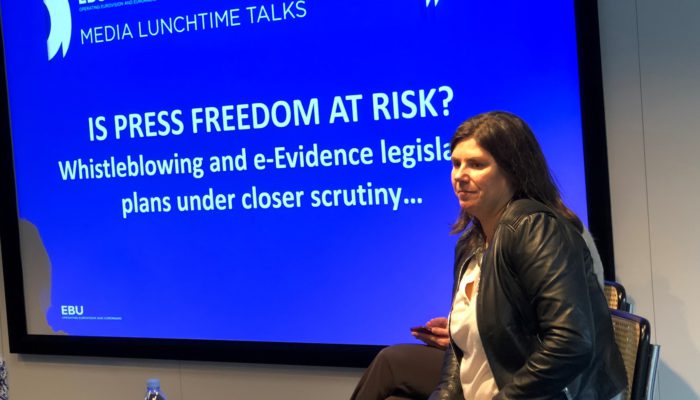
Rozière positions whistleblower protection law as response to public concerns
It would be a real shame if member states’ representatives were now seen as acting against public concerns, in resisting a whistleblower protection law which encourages the reporting of crime and wrongdoing.
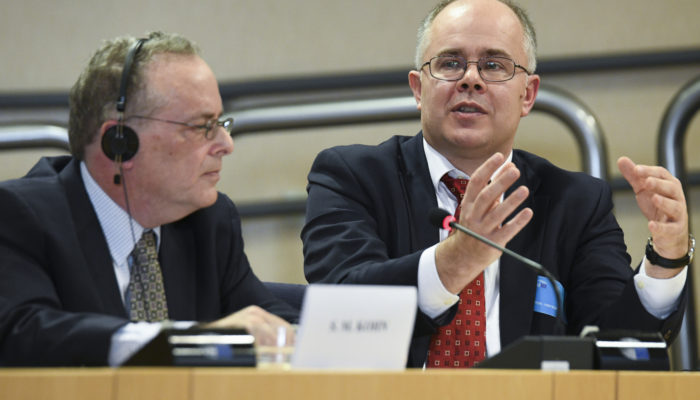
Danske Bank whistleblower testifies at European Parliament
The now famous Danske Bank Whistleblower, Howard Wilkinson, testified before the TAX3 European Parliament Committee last week. Wilkinson reported suspicious financial transactions at Danske Bank’s Estonia branch, where he worked until 2014.

European Parliament takes stand on stronger whistleblower directive
The WhistleblowerProtection.EU platform is celebrating a job well done, after the Legal Affairs Committee of the European Parliament passed a strengthened whistleblower protection directive, on the 20th of November.

Political battles loom in fight for robust European whistleblowers Directive
The EU’s whistleblower protection directive, is in a state of flux, key political battles are being fought right now. The whistleblower proposals as they currently stand, have several Achilles heels tucked into the directive’s fine print.
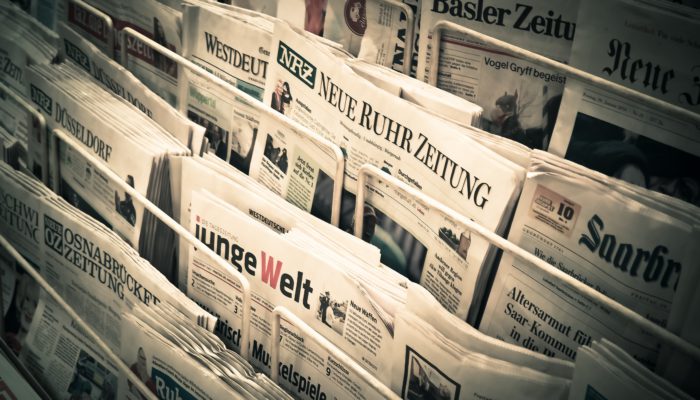
The role of media and investigative journalism
The LuxLeaks revelations were unprecedented not only in the level of corruption they uncovered, but also in the vast array of journalists from different media organisations working together to uncover corruption.
Why cross-border coherence matters
Many of the biggest whistleblower disclosures of recent years have been international in nature – LuxLeaks and the Panama Papers in particular. As pointed out by the Greens in the European Parliament, there is a general European public interest that often supersedes the national interests of a single member state.
State of play
Protection for whistleblowers in Europe is currently a patchwork affair. Some countries, such as Ireland having robust laws in place, while others, such as Cyprus, have practically none. 16 EU member states have specific laws or provisions, and 10 of those adopted their laws or in the past 5 years.
- « Previous
- 1
- 2
- 3
- 4