
The Duty Speech Loophole: how the EU Whistleblower Directive could backfire against its own objectives
Tom Devine, Legal Director of the Government Accountability Project (a co-founder of Whistleblowing International Network) explains that unless a serious “technical contradiction is resolved [the EU draft directive] could backfire against its own objectives, against employers and especially against whistleblowers”
This article first appeared on the Whistleblowing International Network website
Devine urges the European Council to avoid violating fundamental global best practices in whistleblowing laws by adopting the precedents of EU member states of Ireland and the Romanian Presidency Romania where no such mandatory internal reporting through designated channels exists.
Reporting internally should be protected easily.
Reporting internally should be protected easily – organisations should want to learn about any and all potential problems early and promptly with few barriers for staff to speak up safely. However, according to the draft directive, staff will only be protected from retaliation if they use the official channels employers will be required to set up. This misunderstands the essence of all whistleblowing laws to create safe channels for the free flow of information in order to responsibly exercise authority.
Good employer whistleblower arrangements are those that support rather than replace regular communications
Good employer whistleblower arrangements are those that support rather than replace regular communications that occur as part of everyone’s job responsibilities within any business or organisation. Instead, the EU draft directive seeks to limit protected reports within the employment relationship to a single designated channel. This risks undermining employers’ management structures and risk management systems, leaves whistleblowers defenceless if they are retaliated against for doing their jobs, and diverts information away from those who need it the most.
The EU draft directive seeks to limit protected reports within the employment relationship to a single designated channel.
After 40 years of advising whistleblowers and being at the forefront of laws to protect whistleblowers in the United States and around the world, Tom Devine’s expertise is grounded in the reality of whistleblowing and what makes good organisations even better. The European Council should be listening.

About the author
Tom Devine is Government Accountability Project's Legal Director, and has worked at the organization since 1979. Since that time, Tom has assisted over 5,000 whistleblowers in defending themselves against retaliation and in making real differences on behalf of the public.
Tom has authored or co-authored numerous books, including 2011's The Corporate Whistleblowers Survival Guide: A Handbook for Committing the Truth, Courage Without Martyrdom: The Whistleblower's Survival Guide.
MORE ARTICLES
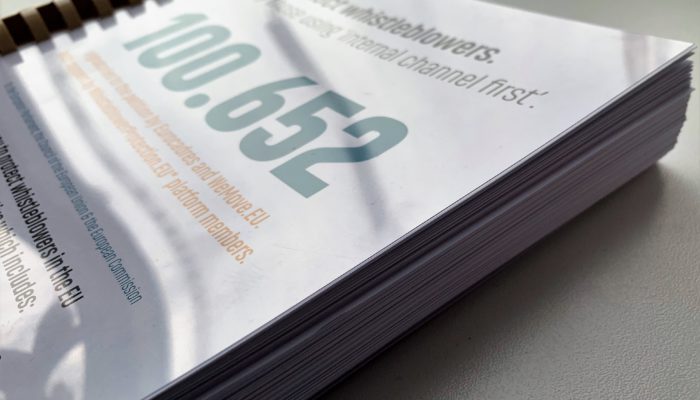
Over a quarter of a million signatories support better whistleblower protection
Today trade unions and NGOs will deliver two petitions gathering over 280,000 signatures supporting the European Parliament’s demands for an improved directive.

European whistleblowers call for better directive
In an open letter to the European Council, Commission and Parliament seven well-known European whistleblowers speak out for changing the directive and removing barriers for safe reporting.
Whistleblowers could be badly served by the EU’s proposed Whistleblowing Directive
The EU Whistleblowing Directive is an idea whose time has come. New whistleblower protection laws in Ireland, France and the Netherlands showed consensus was building among EU Member States on the need to protect and enable workers to speak up about wrongdoing in the workplace.

Change the whistleblower protection directive – or it will not work
The directive must be changed to that whistleblowers can report not only a special internal whistleblowing channel, but also to managers or law enforcement.
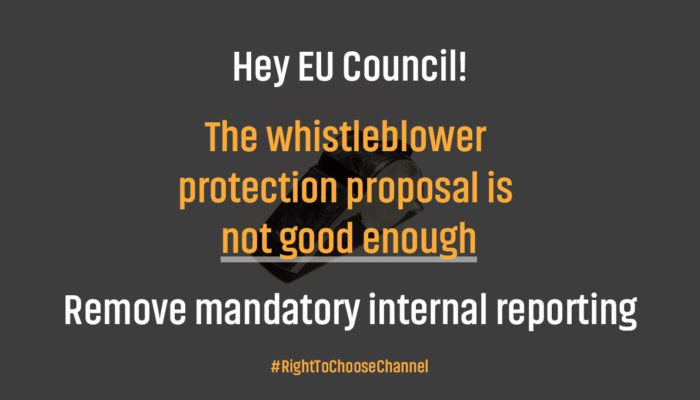
Making whistleblowing work for Europe
In an open letter 81 signing organisations urge the EU Council to adopt the Parliament’s position on reporting channels. The whistleblower protection directive is currently in trilogue. The signatories express serious concerns about the reporting channels regime in the Council and Commission positions in these negotiations.
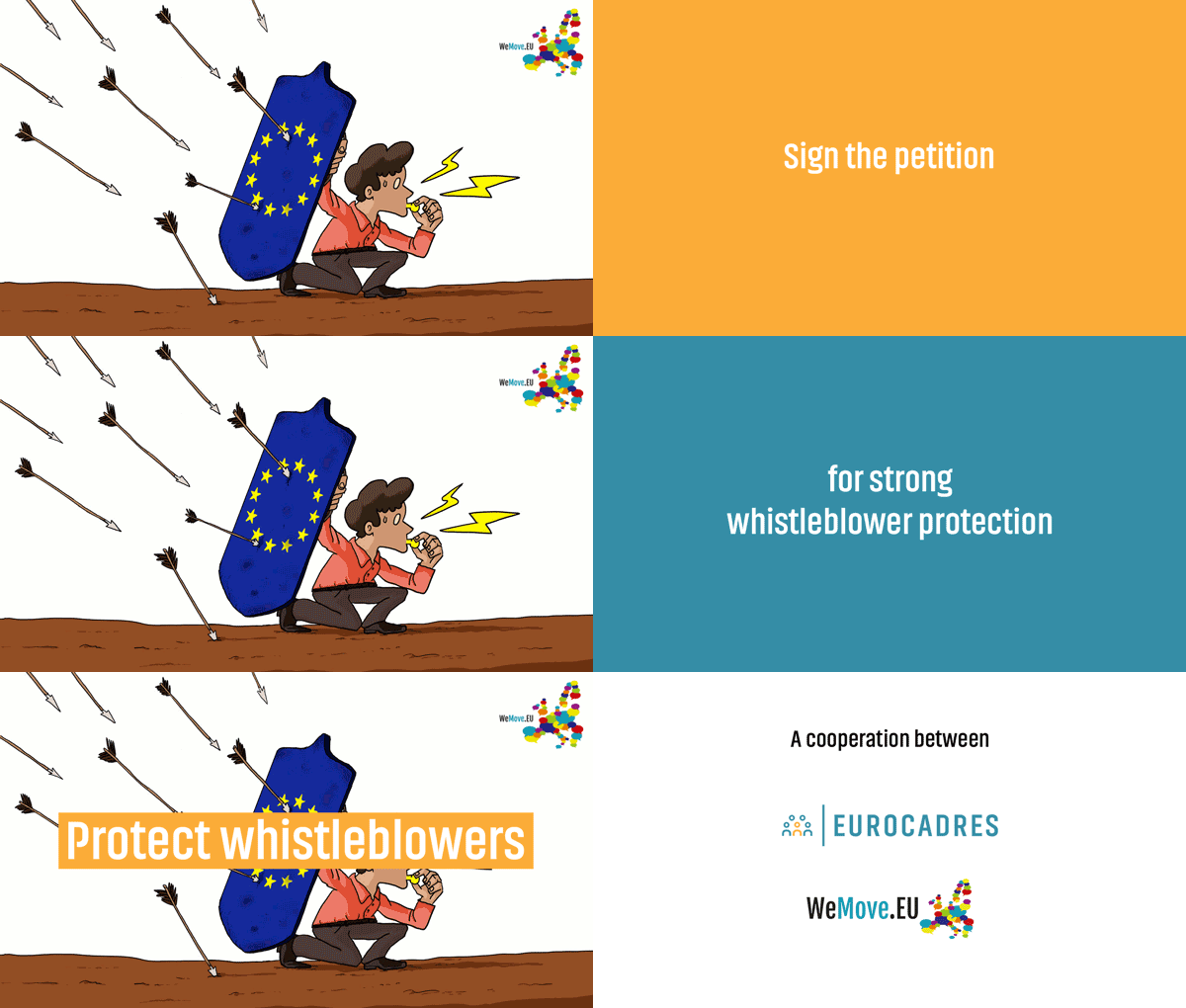
Petitioning for a better whistleblower protection directive
A few weeks left to improve the whistleblower protection directive. Make your voice heard and sign the new petition for strong whistleblower protection!
What can the EU learn from Romania’s experience implementing whistleblower legislation?
The Romanian Presidency will play a key role is securing a robust whistleblower protection Directive, argues R. Nicolae, of Syene. He believes that Romania has a number of strengths which will support it leading the negotiations, as the whistleblower protection file moves from the Council to trilogue.

Will the EU whistleblower directive prohibit the obstruction of justice?
According to the Legal Counsel of the Danske Bank Whistleblower, S. Kohn, the Howard Wilkinson case clearly demonstrates that the EU Whistleblower Directive urgently needs to be revised to protect the right to report directly to law enforcement agencies and regulatory authorities.

The Duty Speech Loophole: how the EU Whistleblower Directive could backfire against its own objectives
Tom Devine, Legal Director of GAP explains why a series of technical contradictions within the EU draft directive need to be resolved, or the legislation could backfire and actually work against whistleblowers.
Legal issues must not derail whistleblower protection law
Council legal opinion must not be used to delay completion of whistleblower protection legislation
- « Previous
- 1
- 2
- 3
- 4
- Next »