
Best practice guide on whistleblowing for trade unions
What should be the role of trade unions in whistleblowing? Which internal arrangements, should be in place to establish a culture which promotes whistleblowing? In a toolkit developed in a project cooperation between Protect and Eurocadres a best practice for whistleblowing is put forward.
The toolkit is an outcome of a project carried out by Eurocadres in cooperation with Protect, the UK’s whistleblowing charity with over 25 years’ experience advising workers on whistleblowing rights and promoting best practice amongst employers. Protect is also part of WhistleblowerProtection.EU, the whistleblowing directive campaign and advocacy platform created by Eurocadres. The project including the development of the toolkit is financed by the European Commission,
–We are immensely proud to today present the fruits of our project cooperation with Protect. It has been an absolute joy to cooperate with and learn from Protect and their over 25 years of experience of promoting whistleblowers rights. We are convinced that this toolkit can be a strong support to trade unions in engaging more actively in the whistleblowing process, says Martin Jefflén, Eurocadres President.
We are convinced that this toolkit can be a strong support to trade unions in engaging more actively in the whistleblowing process,
In a foreword to the publication Martin Jefflén, Eurocadres President writes: After several years of hard work there is now an EU Directive in place to protect whistleblowers. The Whistleblowing Directive offers both an opportunity and a responsibility for trade unions, and not only for trade unions representing professionals and managers.
Complex role of trade unions
The toolkit contains a model policy and discusses the sometimes complex role of trade unions, sometimes representing both the whistleblower and the person accused of wrongdoing. In a number of case studies the reader is invited to reflect on practical situations, which lessons can be learned from these situations, and what trade unions can do to help in these cases.
With the Whistleblowing Directive under transposition all trade unions with more than 50 employees will eventually be obliged to put in place an internal reporting channel. The toolkit is to assist trade unions in the work to engage with employers in the setup of internal reporting channels.
Webinar launch
During the Eurocadres webinar Workers with whistles on 3 December, Elizabeth Gardiner, Chief Executive of Protect introduced the toolkit underlining this aspect:
I hope that this toolkit will help trade unions take up those opportunities in developing effective channels with their employers and fulfill their responsibilities of better supporting those who are trying to speak up to stop harm.
–I hope that this toolkit will help trade unions take up those opportunities in developing effective channels with their employers and fulfill their responsibilities of better supporting those who are trying to speak up to stop harm.
MORE ARTICLES

The European Council must ensure EU delivers on its promise to whistleblowers
The European Council has a responsibility to protect the positive amendments made to the proposal for a whistleblower protection directive adopted by the European Parliament’s legal affairs committee last month.
Rozière positions whistleblower protection law as response to public concerns
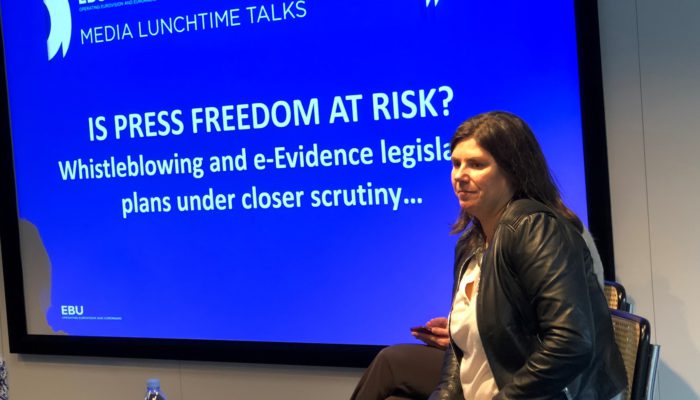
It would be a real shame if member states’ representatives were now seen as acting against public concerns, in resisting a whistleblower protection law which encourages the reporting of crime and wrongdoing.
Danske Bank whistleblower testifies at European Parliament
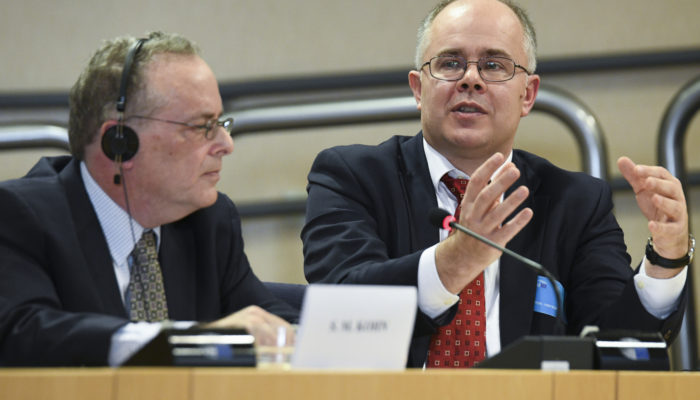
The now famous Danske Bank Whistleblower, Howard Wilkinson, testified before the TAX3 European Parliament Committee last week. Wilkinson reported suspicious financial transactions at Danske Bank’s Estonia branch, where he worked until 2014.

European Parliament takes stand on stronger whistleblower directive
The WhistleblowerProtection.EU platform is celebrating a job well done, after the Legal Affairs Committee of the European Parliament passed a strengthened whistleblower protection directive, on the 20th of November.

Political battles loom in fight for robust European whistleblowers Directive
The EU’s whistleblower protection directive, is in a state of flux, key political battles are being fought right now. The whistleblower proposals as they currently stand, have several Achilles heels tucked into the directive’s fine print.

The role of media and investigative journalism
The LuxLeaks revelations were unprecedented not only in the level of corruption they uncovered, but also in the vast array of journalists from different media organisations working together to uncover corruption.
Why cross-border coherence matters
Many of the biggest whistleblower disclosures of recent years have been international in nature – LuxLeaks and the Panama Papers in particular. As pointed out by the Greens in the European Parliament, there is a general European public interest that often supersedes the national interests of a single member state.

State of play
Protection for whistleblowers in Europe is currently a patchwork affair. Some countries, such as Ireland having robust laws in place, while others, such as Cyprus, have practically none. 16 EU member states have specific laws or provisions, and 10 of those adopted their laws or in the past 5 years.
- « Previous
- 1
- 2
- 3
- 4