
Rozière positions whistleblower protection law as response to public concerns
European institutions have been seen as being too close to lobbyists and vested interests. It would be a real shame if member states’ representatives were now seen as acting against public concerns, in resisting a whistleblower protection law which encourages the reporting of crime and wrongdoing, said Virginie Rozière MEP.
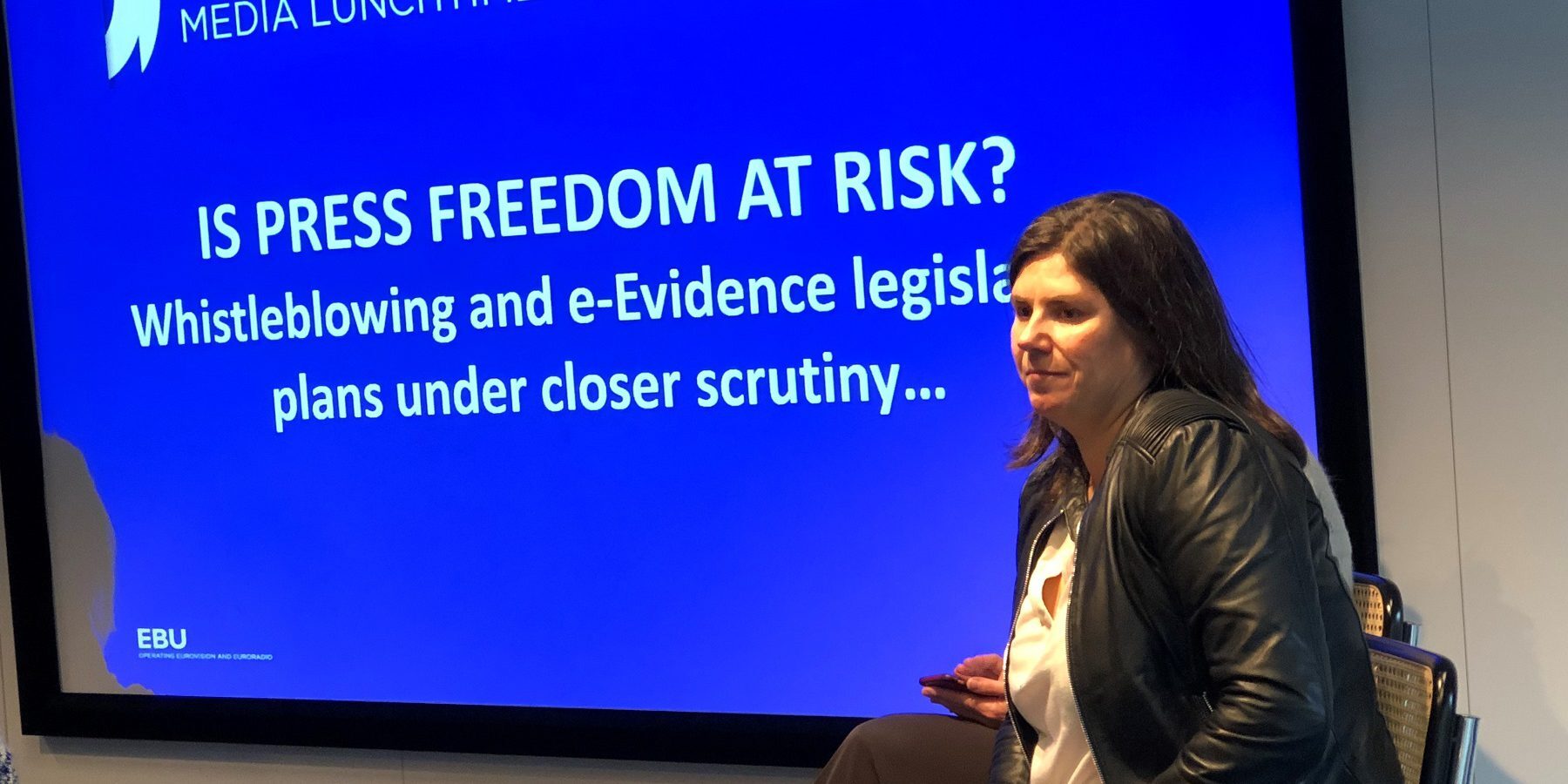
The Rapporteur for the Whistleblower Protection Directive spoke at the recent European Broadcasting Union (EBU) event. Two days after successfully steering the whistleblowers protection measures, through the EP’s Legal Affairs Committee.
‘The European Parliament and the Council have to embrace the fact that elections are close at hand. Whistleblowers have largely driven the current mandate of the European Parliament (EP)’, Rozière stated.
Whistleblowers combat money laundering & tax evasion
If you think about Lux Leaks, the Panama Papers and now the Danske Bank case, whistleblowers interventions and revelations have been essential in helping us combat tax fraud, tax evasion and money laundering, continued the MEP. So, it is important that we in the EP now give them our protection and support with an ambitious whistleblower protection law, which was only partially represented in the initial proposal developed by the European Commission.
Whistleblowers have largely driven the current mandate of the European Parliament
On the strict stepped approach to reporting, where internal reporting is mandatory as a first step, the MEP highlighted the 2014 Council of Europe Recommendation on protection of whistleblowers. It acknowledges that ‘the individual circumstances of each case will determine the most appropriate channel’ when it comes to reporting.
Challenges ahead for directive
Reflecting on the upcoming battle to get the whistleblower protection adopted, Rozière said it could be a challenge to get both the hierarchy between external and internal reporting deleted and reporting on workers’ rights added, as there seems to be reservations in both the Council and from the Commission.
Whistleblowers are best placed to determine whom to disclose the information they have uncovered to, including reporting to the media
Chairing the event, Nicola Frank, EBU’s Head of European Affairs emphasised the importance of whistleblowers as a source for investigative journalism. She also noted that whistleblowers are best placed to determine whom to disclose the information they have uncovered to, including reporting to the media, which was included in the report on the directive, recently adopted by the EP. Frank welcomed the EP committee’s decision to delete the stepped approach to reporting, despite fierce political opposition.
MORE ARTICLES

The European Council must ensure EU delivers on its promise to whistleblowers
The European Council has a responsibility to protect the positive amendments made to the proposal for a whistleblower protection directive adopted by the European Parliament’s legal affairs committee last month.
Rozière positions whistleblower protection law as response to public concerns
It would be a real shame if member states’ representatives were now seen as acting against public concerns, in resisting a whistleblower protection law which encourages the reporting of crime and wrongdoing.
Danske Bank whistleblower testifies at European Parliament
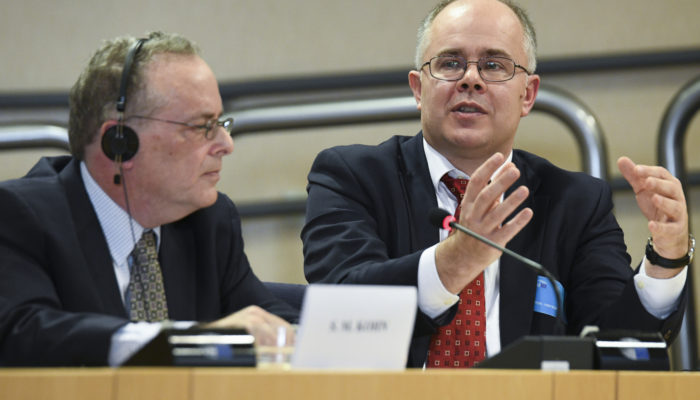
The now famous Danske Bank Whistleblower, Howard Wilkinson, testified before the TAX3 European Parliament Committee last week. Wilkinson reported suspicious financial transactions at Danske Bank’s Estonia branch, where he worked until 2014.

European Parliament takes stand on stronger whistleblower directive
The WhistleblowerProtection.EU platform is celebrating a job well done, after the Legal Affairs Committee of the European Parliament passed a strengthened whistleblower protection directive, on the 20th of November.

Political battles loom in fight for robust European whistleblowers Directive
The EU’s whistleblower protection directive, is in a state of flux, key political battles are being fought right now. The whistleblower proposals as they currently stand, have several Achilles heels tucked into the directive’s fine print.

The role of media and investigative journalism
The LuxLeaks revelations were unprecedented not only in the level of corruption they uncovered, but also in the vast array of journalists from different media organisations working together to uncover corruption.
Why cross-border coherence matters
Many of the biggest whistleblower disclosures of recent years have been international in nature – LuxLeaks and the Panama Papers in particular. As pointed out by the Greens in the European Parliament, there is a general European public interest that often supersedes the national interests of a single member state.

State of play
Protection for whistleblowers in Europe is currently a patchwork affair. Some countries, such as Ireland having robust laws in place, while others, such as Cyprus, have practically none. 16 EU member states have specific laws or provisions, and 10 of those adopted their laws or in the past 5 years.
- « Previous
- 1
- 2
- 3
- 4